The AI Revolution Accelerates: 7 Developments That Would Reshape the Industry

This week has been nothing short of extraordinary in the AI "realm". From breakthrough reasoning models to open-source coding powerhouses, we're witnessing a pivotal moment that could redefine how we interact with artificial intelligence. Here are the 8 most significant developments that have the entire tech community buzzing.
Hi, I am Amit Sharma. I am a Senior Full-Stack AI Engineer. Got a project on your mind? Let's talk about your idea.
Catch-Up With AI
-
Google DeepMind Unveils Gemini 2.5 Deep Think
Google DeepMind just dropped what might be their most ambitious project yet - Gemini 2.5 Deep Think, a model specifically engineered for complex problem-solving that goes far beyond simple question-answering.
This isn't just another incremental improvement. Deep Think represents a fundamental shift toward AI systems that can engage in genuine reasoning processes, potentially matching human-level problem-solving in specialised domains. The implications for scientific research, strategic planning, and complex decision-making are staggering.
https://youtu.be/QoXRfTb7ves
-
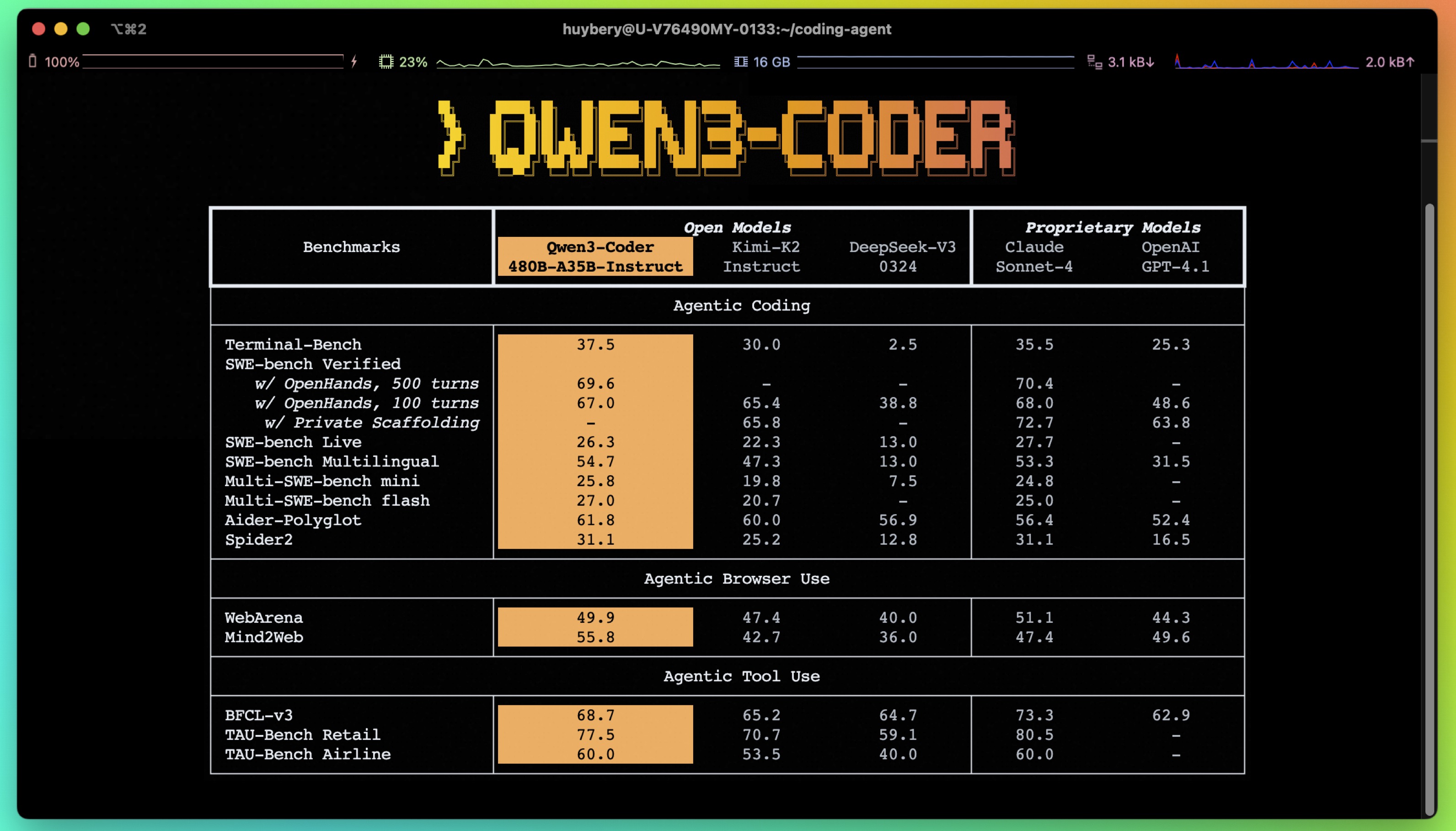
Alibaba's Qwen3 Coder Flash: The Open-Source Giant That Rivals Claude Sonnet 4
In a bold move that's shaking up the coding AI landscape, Alibaba has released Qwen3-Coder-Flash, a 30.5B parameter model that's not just powerful—it's completely open source under Apache 2.0 license.
This isn't your average coding assistant. With its Mixture-of-Experts architecture featuring 128 experts (8 activated per inference), it delivers Claude Sonnet 4-level performance while running on consumer hardware. The model achieves 51.6% on SWE-bench Verified and supports a massive 256K context window expandable to 1M tokens.
For the first time, developers can deploy enterprise-grade coding AI locally, breaking free from API dependencies and cloud costs. This democratisation of advanced coding AI could fundamentally alter how software development teams operate. You can try it here
-
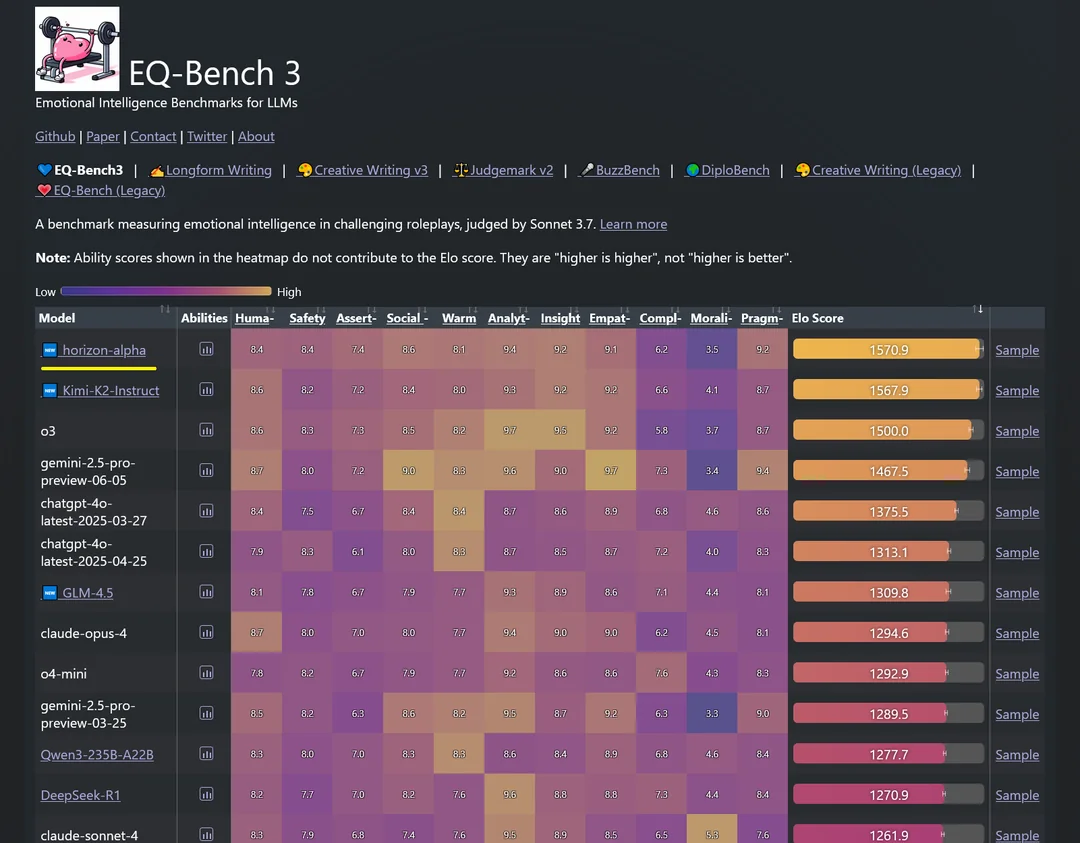
OpenAI's Mystery Model "Horizon Alpha" Shatters Benchmark Records
A stealth model linked to OpenAI, codenamed "Horizon Alpha", has quietly appeared on OpenRouter and is setting new benchmark records across multiple evaluation metrics.
While OpenAI remains tight-lipped, industry insiders suggest this could be an early glimpse of GPT-5 or a specialised variant designed for specific enterprise applications. The secrecy surrounding its capabilities has created a buzz reminiscent of the early GPT-4 days.
-
BFL's FLUX.1 Krea: Photorealistic Image Generation Goes Open Source
BFL has just launched FLUX.1 Krea, an open-weights photorealistic image model that's giving Midjourney and DALL-E serious competition—and it's completely free to use and modify.
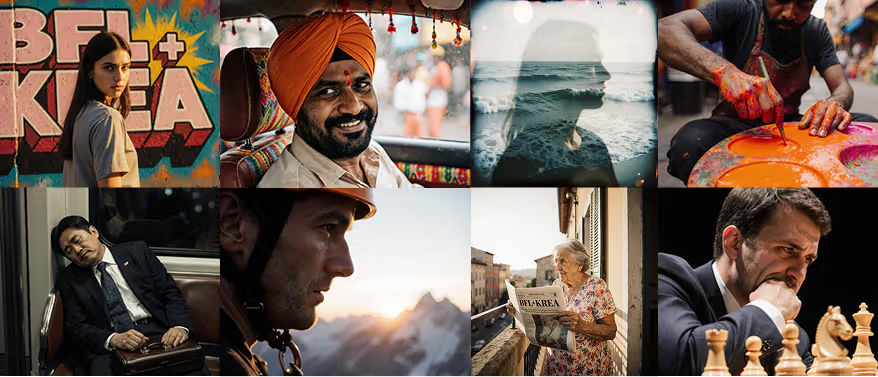
This model represents a breakthrough in open-source image generation, delivering photorealistic results that were previously exclusive to proprietary models. The implications for content creators, marketers, and artists are enormous.
By making high-quality image generation accessible to everyone, FLUX.1 Krea is levelling the playing field in visual content creation.
-
Microsoft Research Drops the Jobs Bombshell: Which Careers Are Actually at Risk?
While we've been marvelling at AI's technical achievements, Microsoft researchers just released a sobering study that ranks 200+ occupations by their vulnerability to AI displacement—and the results are shaking up career conversations worldwide.
Translators, historians, and writers top the list of roles with the highest AI applicability scores, meaning their tasks align most closely with current AI capabilities. Even more striking? Many jobs requiring four-year degrees, like political scientists, journalists, and management analysts, are among the most exposed, challenging the long-held belief that higher education provides job security in the AI age.
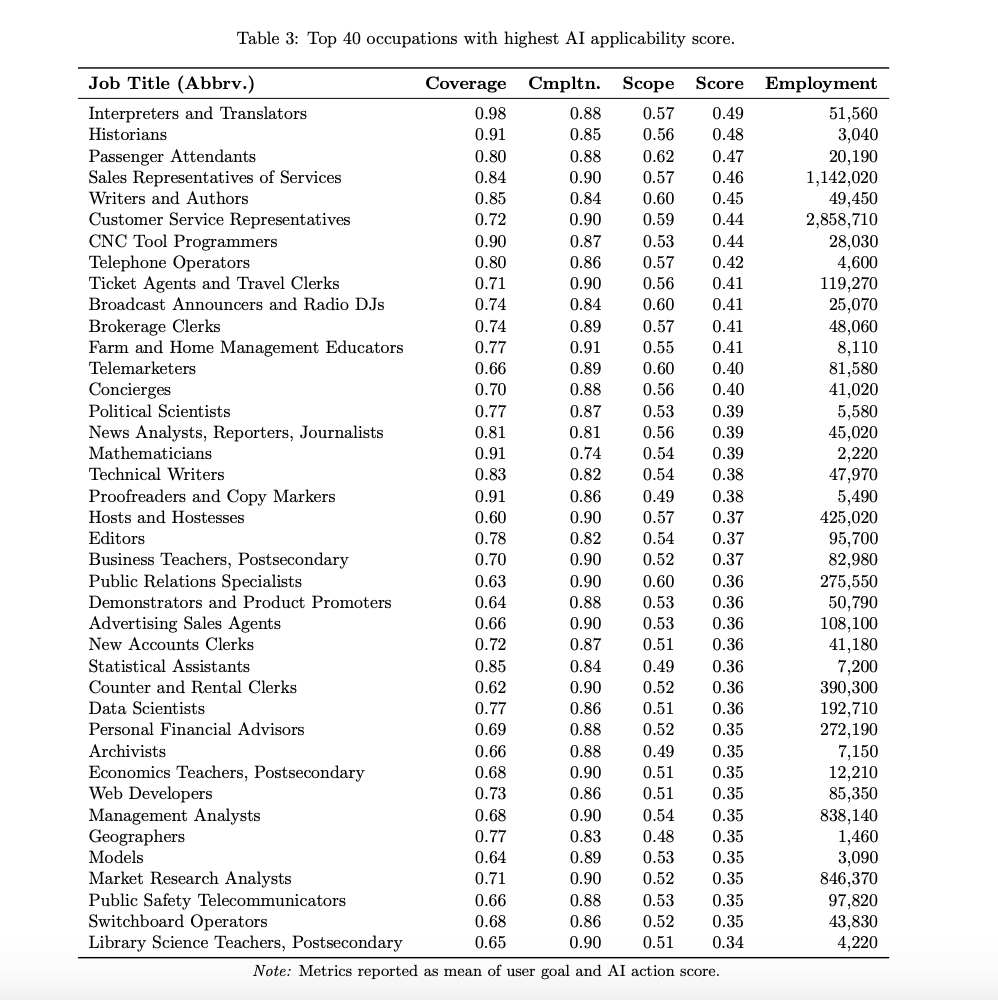
After witnessing tech industry layoffs, many Gen Z graduates flocked to education as a "safe" career choice, making it the fastest-growing industry among recent UK graduates. But the research reveals that even teaching roles - from business educators to economics professors - face significant AI applicability.Not all news is concerning. Jobs requiring hands-on equipment operation, like water treatment plant operators, bridge tenders, and logging equipment operators, show virtually no AI exposure. The healthcare sector, particularly home health and personal care aids, is expected to create the most new jobs over the next decade.
As Nvidia CEO Jensen Huang bluntly put it: "You're not going to lose your job to an AI, but you're going to lose your job to someone who uses AI." The message is clear - adaptation, not avoidance, is the survival strategy.
-
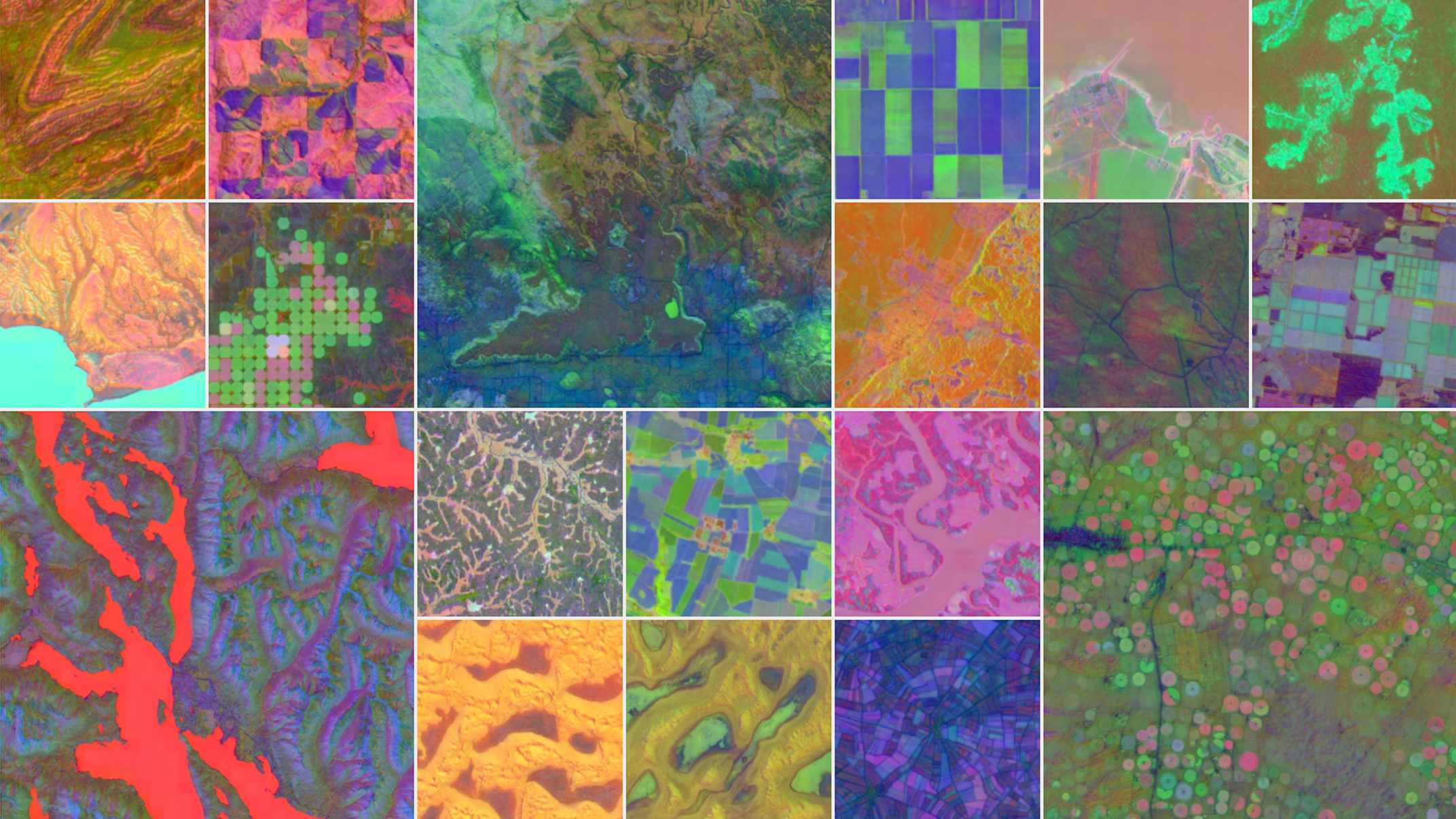
Google DeepMind's Planetary Mapping AI: Earth Intelligence at Scale
Google DeepMind has developed a unified AI model specifically for planetary mapping, bringing unprecedented accuracy and scale to Earth observation and environmental monitoring.
As climate change accelerates, having AI systems that can monitor and analyse planetary-scale changes becomes crucial for informed decision-making and early warning systems. The future vision of this technology is that it could revolutionise everything from disaster response to urban planning, giving us a real-time, AI-powered understanding of our planet's changing dynamics.
-
Runway has launched Aleph
Runway just dropped Aleph, a new tool for editing and creating videos. Itis a state-of-the-art in-context video model, setting a new frontier for multi-task visual generation, with the ability to perform a wide range of edits on an input video such as adding, removing, and transforming objects, generating any angle of a scene, and modifying style and lighting, among many other tasks.https://www.youtube.com/watch?v=KUHx-2uz_qI
Exciting Week
These eight developments represent more than just incremental progress—they signal a fundamental shift in AI capabilities. From open-source democratisation to breakthrough reasoning abilities, we're witnessing the emergence of AI systems that are more powerful, accessible, and specialised than ever before.
The question isn't whether AI will transform industries - it's how quickly organisations can adapt to leverage these new capabilities. The future isn't coming; it's already here, and it's moving faster than most of us imagined.
I write about the latest AI news and interesting research papers that power the new age AI tools. Keep following me on X and LinkedIn, where I keep updating about the release of my blogs.